 The Science & Art of Baby Care
Where innovation meets your baby’s well‑being.
TUTIS LAB is our research and development space. Together with specialists in child development and ergonomics, we study how babies grow — and test every detail of a stroller against it.
partnership with health professionals begins
specialists in ergonomics and child development
rough-terrain test with 28 kg (EN 1888: 144 km)
less peak impact with adaptive suspension (in-house tests)
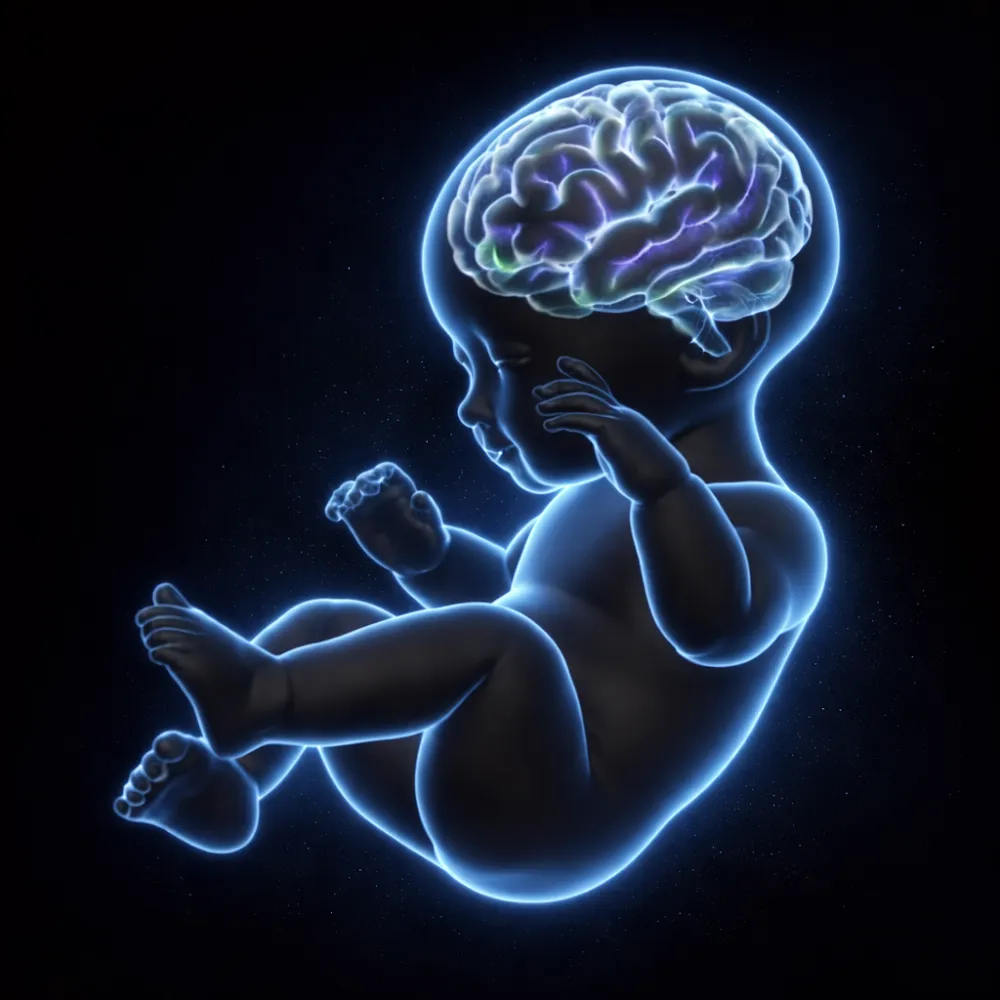
Babies are born less developed than many animal newborns.
Every month matters.
That is why the first months are called the “fourth trimester”. The brain, nervous system, vision and spine develop extremely fast — and need a safe, stable and gentle environment.
- Brain
- Nervous system
- Vision
- Spine
Every step mattersAge in monthsBuilding the foundation for all future learning and connection.
- SeeVision begins to focus
- ConnectResponds to sounds
- MoveReflexes are strongest
Discovering the world and enjoying first connections.
- SeeEyes track moving objects
- TouchReaches for objects
- ConnectEnjoys social interaction
Exploring, reaching and gaining more independence.
- TouchPasses objects from hand to hand
- ThinkExplores textures and shapes
- MoveSits without support
Becoming more mobile and understanding more each day.
- TouchPincer grasp develops
- MovePulls to stand and cruises
- ThinkUnderstands simple words
Gaining confidence, solving problems, expressing new thoughts.
- MoveWalks independently
- ThinkProblem solving emerges
- ConnectSays first words
Full of curiosity, imagination and independence.
- ConnectSpeaks in short sentences
- MoveRuns, climbs and explores
- ThinkShows independence and makes choices
A smoother ride supports calm development.
A newborn’s head is relatively large and the neck muscles are still developing. Research suggests that continuous vibration and sudden impacts may affect a baby in several ways.
Nervous system
Continuous vibration may overstimulate the developing nervous system.
Grizenko et al., 2022Sleep
Irregular movement may make sleep less restful.
Grizenko et al., 2022Neck and spine
Bumps and uneven surfaces may strain neck muscles, especially in younger babies.
University of Bristol, 2022Balance
Intense or prolonged vibration may affect the developing sense of balance.
Mayer et al., 2025Each wheel responds on its own.
In a conventional stroller, shock absorption is shared across the whole chassis. In the adaptive system each wheel adapts to the surface independently — absorbing bumps and dips before they reach your baby.
Schematic illustration. In-house tests by the TUTIS engineering team: peak impact reduced by up to 50%.
From research to the stroller.
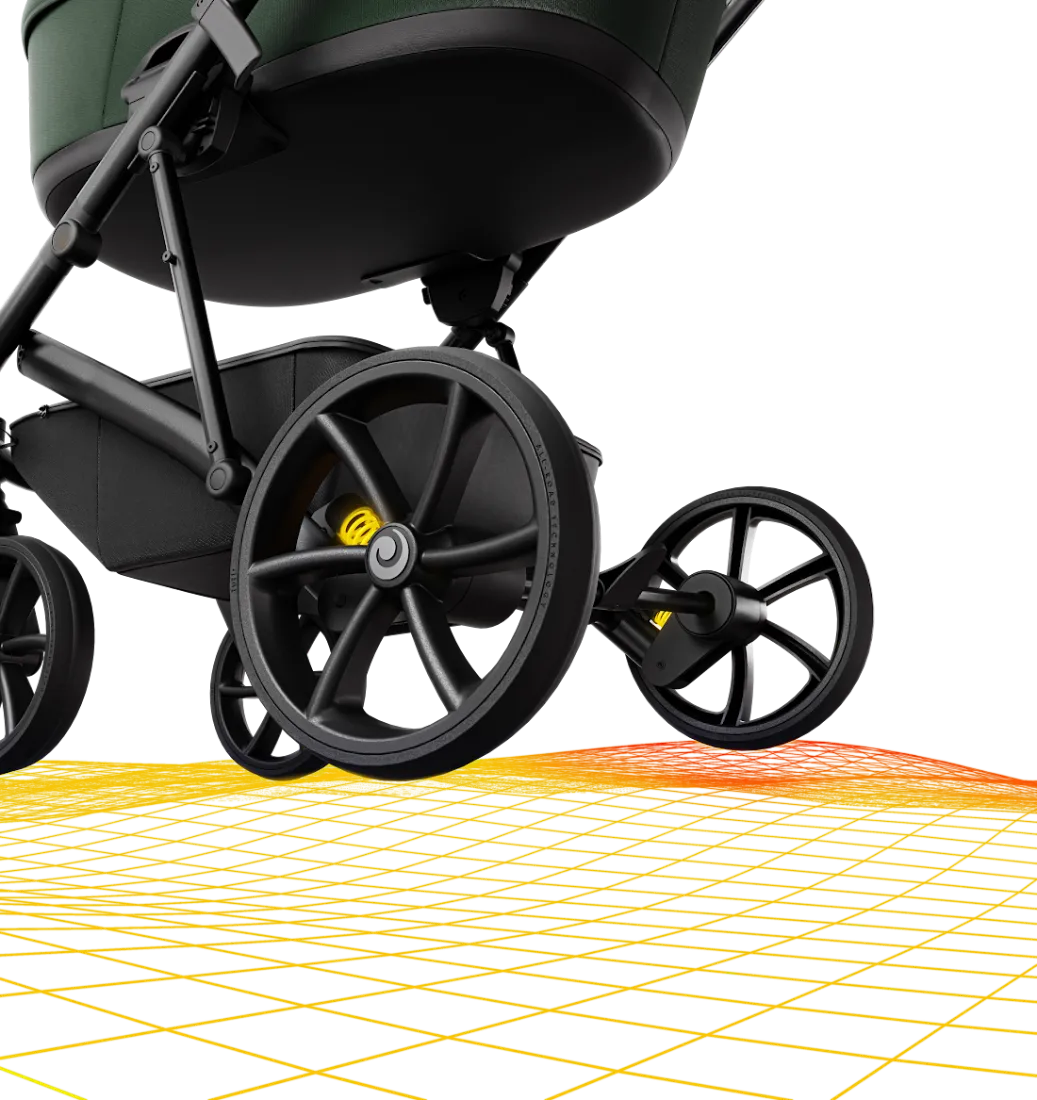
Suspension system
- What it does
- Softens shocks and vibration from the road.
- For your baby
- Less load reaches the head and spine.
- For you
- A calm walk, even on uneven ground.
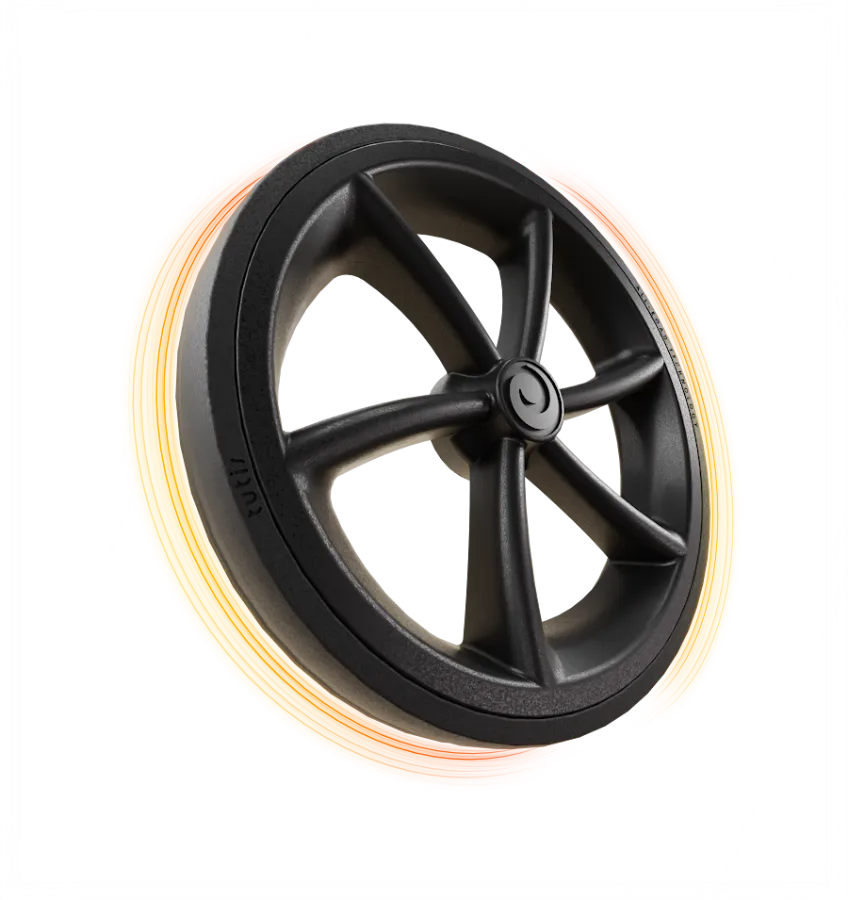
ALL-ROAD™ wheels
- What it does
- Soft, durable wheels absorb road vibration.
- For your baby
- Movement feels smoother.
- For you
- Confident handling on different surfaces.
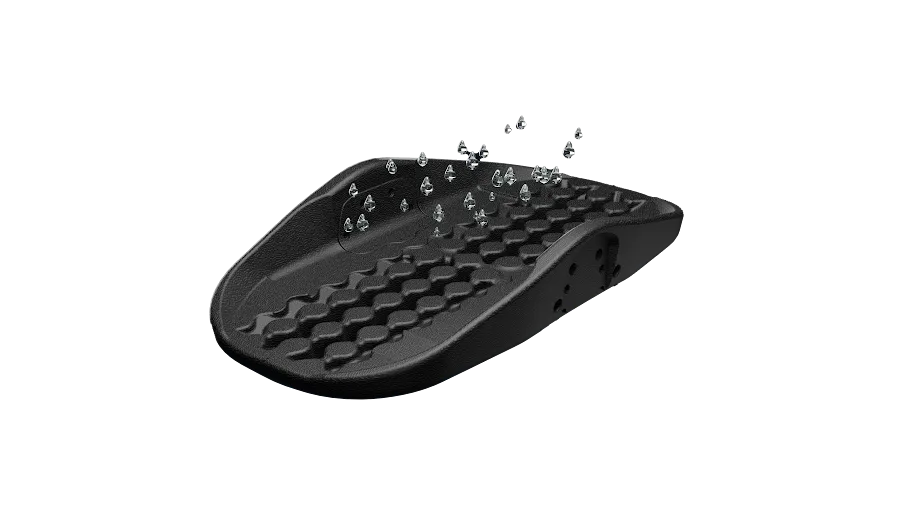
THERMOCOT™ and mattress
- What it does
- Absorb fine vibration and surrounding noise.
- For your baby
- A calmer, more stable environment.
- For you
- More peace of mind on every walk.
Tested beyond the standard.
EN 1888 is the European safety standard for strollers. We test with higher loads, longer distances and more repetitions than it requires.
EN 1888 tests with 15–22 kg.
Source: TUTIS LAB 2026. EN 1888 values show the standard’s test requirements.
Science-based, not advertising.
Since 2024 we have worked closely with health professionals so that our products support healthy posture, movement and development from the first days.
- Dr. Ir. Brecht DaamsPhD in engineering and ergonomics. Member of the Institute of Ergonomics and Human Factors.
- Miglė DatenytėChildren’s physiotherapist
- Jovita MinčėPaediatric occupational therapist
- Magdalena MajewskaChildren’s physiotherapist
- Maksymilian PiaseckiPhysiotherapist
- 2024Health professionals guide our research and development.
“We create products that give parents peace of mind.”
Every detail is thoughtfully designed to help babies feel safe, comfortable and free to develop naturally — so parents can enjoy every moment together.
TUTIS LAB 2026 · 66 pages · in EnglishThe full TUTIS LAB book.
Development, ergonomics and testing — every chapter in one place.
Open the book ↗- Infant development4
- Science-based innovation10
- Chassis17
- Carrycot32
- Seat unit44
- Car seat57
- The Joy of Responsibility63
From knowledge to stroller.
See how the research shapes every model.